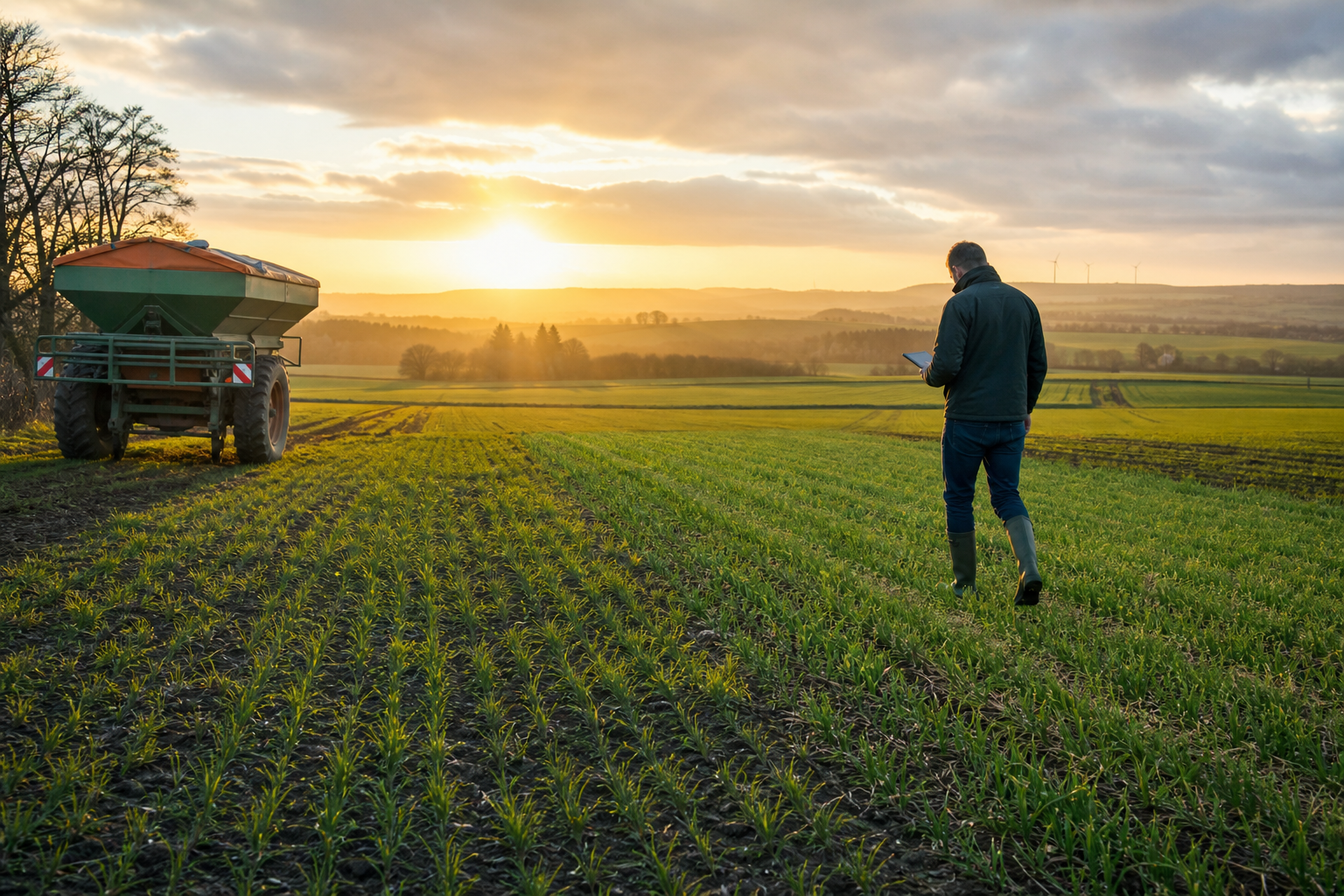
Spring Field Prioritization After Wet Weather
Why spring field prioritization matters after a wet start
When spring opens with repeated rain events, the first big management decision is often not what hybrid or variety to plant, but which field can be planted first without creating bigger problems later. That is where spring field prioritization becomes essential.
Wet weather compresses the planting window, increases the temptation to push equipment too early, and raises the risk of sidewall smearing, shallow compaction, ruts, uneven emergence, and delayed stand development. In many seasons, the penalty from planting a field too wet is greater than the penalty from planting that same field a few days later under better conditions.
Good prioritization helps you avoid emotional decisions and replace them with a repeatable process. Instead of reacting to whichever field is closest to the yard or whichever landlord is calling first, you can rank every field by trafficability, drainage, planting fit, yield potential, and economic impact.
Tools that combine field mapping, crop tracking, live weather monitoring, and financial analytics make this process faster because you can compare field conditions and business risk in one place rather than across notebooks, texts, and spreadsheets.
The goal is not simply to plant early. The goal is to plant the right field at the right time in a way that protects emergence, root development, and final profitability.
Start with a field-by-field readiness assessment
After wet weather, avoid making whole-farm assumptions. Two fields a mile apart can behave very differently depending on soil type, slope, drainage, residue, tillage history, and compaction from the previous fall.
Begin by scoring each field on a few practical criteria:
- Surface dryness: Is the top layer fit to carry equipment without rutting?
- Subsurface moisture: Is there support below the surface, or will tires sink once loaded planters enter?
- Drainage class: Do poorly drained areas still hold water, even if knolls look ready?
- Soil texture: Heavier soils usually need more patience than lighter-textured ground.
- Residue level: High-residue fields often warm and dry more slowly.
- Field access: Can trucks, tenders, and support equipment get in and out without damage?
- Forecast risk: Is another rain event likely before the field can be finished?
This first pass should eliminate fields that are obviously unfit. If a field cannot carry equipment uniformly, it should not be near the top of your planting list, no matter how badly you want to get started.
For weather outlooks and rainfall trends, many growers use the homepage resources at https://www.noaa.gov to watch larger storm patterns. Local extension services can also help calibrate decisions to regional soil and planting conditions, including resources from https://extension.umn.edu and https://crops.extension.iastate.edu.
Build a practical planting priority score
One of the simplest ways to improve spring field prioritization is to assign each field a score. This does not need to be complicated. In fact, a straightforward ranking system usually gets used more consistently than a perfect but overly detailed model.
Suggested scoring categories
- Trafficability score
Rate how likely the field is to support machinery today or within 24 to 48 hours. - Drying speed score
Estimate how quickly the field improves after a rain based on drainage, exposure, and soil type. - Planting urgency score
Consider crop fit, maturity requirements, and whether delayed planting creates greater agronomic or revenue risk. - Yield protection score
Rank how much benefit you gain from timely planting versus the risk of causing compaction if you go too soon. - Operational efficiency score
Factor in travel time, seed logistics, equipment moves, and labor efficiency.
You can use a 1-to-5 scale for each category and total the results. The top fields are not simply the driest fields. They are the fields where conditions, crop timing, and business impact all align.
Example of how this changes decisions
Suppose Field A is lighter ground and nearly fit, but is a lower-margin field scheduled for soybeans. Field B is slightly wetter but has pattern tile, dries quickly, and is intended for corn with stronger revenue potential if planted on time. In some cases, Field B may deserve higher priority once conditions cross the acceptable trafficability threshold.
This is where mapping history matters. If you already use digital boundaries and zone-based planning, you may also want to review strategies like those discussed in Use Field Maps to Build Profit Zones for Seeding. Profit and productivity patterns often help break ties between fields that appear equally ready.
Know which field factors should move a field up the list
Not every field responds the same way to delayed planting. Strong spring field prioritization depends on knowing which characteristics truly deserve urgency.
Fields that often move up in priority
- Well-drained fields that are fit earlier: These can let you start without causing structural damage.
- Corn acres with a narrower ideal planting window: In many operations, timely corn planting carries higher yield and revenue sensitivity.
- Fields with a history of crusting or uneven emergence: These often benefit from planting into better conditions rather than rushing.
- Fields far from the farmstead: If the weather window is short, travel logistics can justify moving them up.
- Land with known replant risk: Better timing on vulnerable fields can reduce the odds of stand loss.
Fields that may need more patience
- Heavy clay or poorly drained soils
- Fields with deep residue mats
- Areas compacted during a wet harvest
- No-till fields that are still cold and greasy below the surface
- Bottom ground with patchy saturation
If you track in-field observations by zone rather than treating the field as uniform, you can avoid false readiness. A field may look dry from the road and still contain low spots that create severe stand variability. That is one reason many farms now combine field maps with crop-stage and scouting records. For a related workflow, see How to Use Crop Growth Stage Maps to Plan Fieldwork.
Do not let calendar pressure override soil fit
Every wet spring creates anxiety about lost growing degree days and delayed emergence. But one of the costliest mistakes is chasing the calendar into unfit soils.
Planting too wet can create problems that last all season:
- Restricted root growth from sidewall compaction
- Uneven seed depth and trench closure
- Poor seed-to-soil contact
- Nitrogen loss potential in saturated areas
- Delayed emergence and uneven stands
- Ruts that complicate postemergence operations
Once those problems are created, they are difficult or impossible to fully correct. A field planted two or three days later into better conditions often outperforms a field planted first into soil that was not ready.
That does not mean waiting indefinitely. It means identifying the first fields that are truly fit, then moving quickly and decisively. Weather monitoring, side-by-side field notes, and updated readiness scores help you act with confidence instead of guesswork.
Use crop type, maturity, and market goals to break ties
Sometimes several fields become plantable at once. When that happens, agronomics alone may not determine planting order. This is where crop plan and financial goals should be part of spring field prioritization.
Questions to ask
- Which acres have the greatest revenue sensitivity to delayed planting?
- Do any fields require longer-season products to hit your target?
- Are there delivery contracts or feed needs that make one crop more urgent?
- Which fields have the strongest return if planted within the next weather window?
This is especially important for small to mid-size operations that do not have unlimited planter capacity. If you only have a few good days, every pass needs to support both agronomic performance and cash flow.
That is why many growers benefit from software that combines field records with business reporting. Looking at readiness alone is useful, but looking at readiness alongside expected margins is much more powerful. If you want to compare those capabilities, review CropSense pricing to see how digital planning tools can fit different operation sizes.
Turn weather data into action, not noise
Weather data is only valuable if it changes what you do. In a wet spring, most farms are drowning in forecasts but short on clear decisions.
Use a simple interpretation framework:
- Watch the next 24 hours for field entry conditions.
- Watch the next 3 days for completion risk once planting starts.
- Watch the next 7 to 10 days for whether delayed fields are likely to improve or fall farther behind.
Then pair the forecast with your field scores. A field that is only marginally fit becomes a poor choice if another half inch of rain is due tonight. A well-drained field with a stable 72-hour window may deserve immediate action, even if another field has slightly higher theoretical yield potential.
Reliable field prioritization is dynamic. It should change as weather changes, not remain fixed because of the original plan from March.
Create a repeatable wet-spring workflow for your farm
The best spring field prioritization systems are not built in the middle of panic. They are built as standard operating procedures that the team can follow under pressure.
A practical workflow
- Update field maps and crop plans before spring.
- List each field's drainage, soil texture, access limits, and compaction history.
- Set a scoring system for readiness, urgency, and expected return.
- Review live weather daily during planting windows.
- Record in-field observations after each rain event.
- Re-rank fields every 24 hours during delayed periods.
- Document outcomes after planting to improve next year's system.
This last step is often overlooked. If you compare planting order to emergence quality, replant risk, final yield, and field-level profitability, your prioritization gets sharper every year.
Using a centralized system also reduces communication errors. When everyone can see which fields are green-lighted, which are on hold, and why, the farm moves more efficiently. If you are building that kind of process now, you can try CropSense to organize field maps, growth stages, weather, and financial insights in one workflow.
Common mistakes to avoid
- Prioritizing by habit: Planting the same sequence every year regardless of weather conditions.
- Confusing surface dryness with full profile fitness: A dry crust does not mean the planter zone can support equipment.
- Ignoring low spots: One wet area can hurt stand establishment across a significant part of the field.
- Using only agronomy or only economics: Strong decisions require both.
- Failing to reassess after every rain: Priorities can change fast in unstable spring patterns.
Conclusion: prioritize fields, not pressure
After a wet spring, planting success depends less on speed alone and more on disciplined choices. Spring field prioritization gives you a way to decide what to plant first based on soil fit, drying potential, crop urgency, logistics, and expected return. That means fewer avoidable compaction issues, better emergence, and a planting sequence that supports whole-farm profitability.
If your current system relies on memory, texts, and quick guesses from the road, this is a good season to upgrade your process. Explore CropSense features or start a free trial to manage field maps, crop tracking, weather, and farm financial analytics in one place.
Frequently asked questions
Should I always plant the driest field first?
No. The driest field is not always the best first field. It must also be agronomically fit, operationally efficient, and worth prioritizing based on crop timing and expected return.
How do I know if a field is too wet to plant?
Look beyond the surface. Check whether the soil at planting depth crumbles rather than smears, whether equipment can travel without rutting, and whether low areas are uniformly fit. If the seed zone is greasy or tire tracks sink, wait.
Does wet weather change whether I should plant corn or soybeans first?
It can. Many farms prioritize corn because delayed corn planting can carry greater yield and financial sensitivity, but local conditions, maturity choice, market goals, and field readiness should guide the final decision.
How often should I update field priorities in a wet spring?
During unstable weather, update priorities at least daily and after every meaningful rainfall event. Small changes in forecast or soil conditions can significantly alter which field should be planted next.
Can software really improve spring field prioritization?
Yes. When maps, weather, growth stages, and financial data are in one system, it is much easier to compare fields objectively and adapt quickly as conditions change.
Frequently Asked Questions
What is spring field prioritization?
Spring field prioritization is the process of ranking fields for planting order based on readiness, drainage, soil conditions, crop urgency, logistics, and expected financial return, especially when wet weather limits fieldwork days.
What field conditions matter most after wet weather?
The most important factors are trafficability, subsurface moisture, drainage, soil texture, low spots, residue levels, and whether the seed zone is fit without causing compaction or smearing.
Should I prioritize planting by crop type or by field conditions?
Field conditions should set the boundaries of what is safe to plant, while crop type helps break ties between fields that are similarly ready. The best decisions combine both agronomic fit and business priorities.
How can I reduce compaction risk during delayed spring planting?
Wait until soils can support equipment, avoid marginal fields just to stay on schedule, monitor low areas carefully, reduce unnecessary traffic, and use field-by-field readiness scoring instead of planting by habit.
How often should planting priorities be reassessed in a wet spring?
Reassess every 24 hours during active planting windows and immediately after new rainfall or forecast shifts. Wet spring conditions can change quickly, and yesterday’s first field may not be today’s best option.
Put these insights into action
CropSense brings field mapping, crop tracking, weather, and farm finances into one simple platform.
Start your free trial