Late-Season Cash Flow Forecasting for Fall Decisions
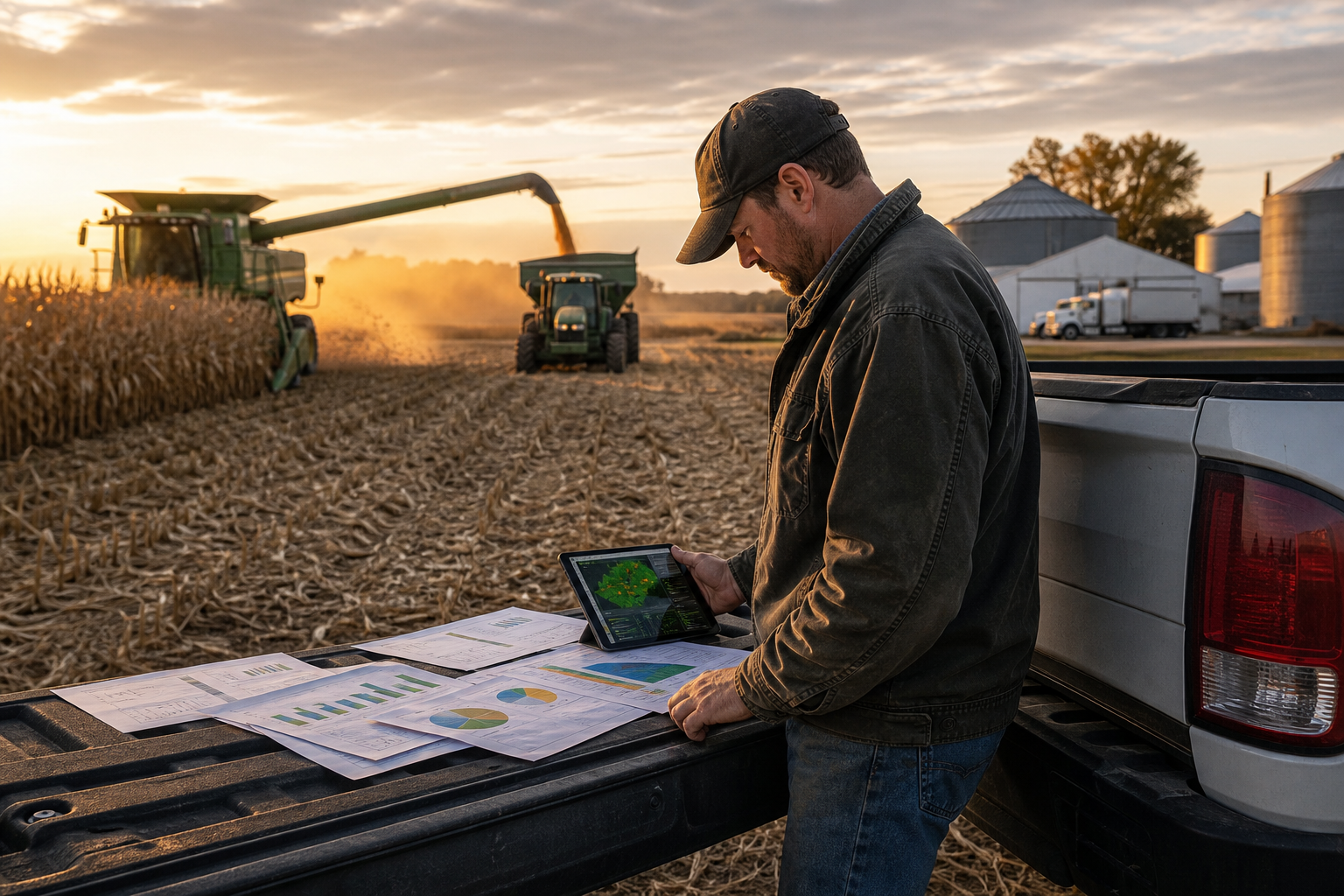
Why late-season forecasting matters
By late summer and early fall, many farm decisions start competing for the same dollars. Prepay fertilizer? Lock in seed and chemistry? Hold grain in storage or move bushels at harvest? Cover land rent, loan payments, repairs, and family living? A good farm cash flow forecast helps turn those choices from guesswork into a plan.
Unlike a year-end budget, late-season forecasting is about timing. You may be profitable on paper and still run short on cash in October or November. Harvest delays, drying costs, basis shifts, and large fall invoices can create pressure fast. A forecast shows when money is likely to come in, when it must go out, and where the gaps may appear.
For small to mid-size farms, this is especially valuable. One mistimed input purchase or one rushed grain sale can affect operating capital well into the next season. A practical forecast helps you protect liquidity while still taking advantage of good fall buying opportunities.
Weather is a major variable in this window. Harvest pace, field access, and drydown all shape both revenue timing and costs, so it helps to pair your financial plan with reliable weather awareness from sources such as https://www.noaa.gov.
What a farm cash flow forecast should include
A useful forecast does not need to be complicated, but it does need to be current. At minimum, build it month by month from now through the end of the calendar year, and ideally through the first quarter of next year. That longer view matters because many fall purchases are paid before the crop that supports them is sold.
Cash inflows to estimate
- Expected grain sales, including bushels, likely sale month, expected cash price, and basis assumptions
- Crop insurance proceeds, if a loss scenario is possible
- Government or program payments, if applicable
- Custom work or other farm income
- Off-farm income, if it supports household cash flow
Cash outflows to estimate
- Fall input purchases such as fertilizer, lime, seed deposits, crop protection, and fuel
- Harvest costs including drying, trucking, storage, labor, and repairs
- Debt service on equipment, land, or operating notes
- Land rent and lease payments
- Family living expenses
- Taxes and insurance premiums
If you want the forecast to be actionable, connect each number to a timing assumption. “Fertilizer: $38,000” is not enough. “Fertilizer: half due in October, half due in December” gives you something you can plan around.
The strongest forecasts are not just accurate on totals. They are realistic about timing.
Start with bushels, not hopes
The common mistake in late-season planning is using a single optimistic yield estimate. A better approach is to work from three production scenarios: conservative, expected, and strong. That gives you a range for both revenue and storage needs.
Use field-by-field estimates instead of a whole-farm average whenever possible. If one farm is drought-stressed and another has strong yield potential, blending them can hide risk. Field-level planning is where digital records become useful. With tools for field mapping, crop tracking, and financial visibility, it is much easier to estimate expected bushels and line those up against contracts, storage, and cash needs.
Late in the season, growth stage and crop condition matter too. If you are still making harvest timing decisions, this related guide on harvest drydown forecasts for corn and soybeans can help sharpen your assumptions for moisture, drying cost, and sale timing.
Build revenue assumptions carefully
For each crop, list:
- Expected harvested bushels
- Bushels already contracted
- Bushels available for spot sale or storage
- Likely cash price range at each sale window
- Freight, drying, handling, and storage costs
This matters because the gross grain check is not the same as available cash. Elevators may deduct drying and other fees. Delayed pricing or storage can improve revenue later but tighten cash now. A disciplined forecast shows those tradeoffs clearly.
Use the forecast to plan fall input purchases
Fall is often the best time to build next season’s fertility and secure some inputs. But “good price” and “good purchase” are not always the same thing. The right question is whether an input buy improves the business after considering cash timing, financing cost, and expected return.
Prioritize high-return, high-need inputs first
Separate fall purchases into three buckets:
- Must-do: nutrients or repairs that protect next year’s yield potential
- Good-to-do: purchases with value, but flexible timing
- Can-wait: items better delayed if working capital is tight
For fertilizer, tie decisions to agronomic evidence instead of habit. Fall soil test data can improve both rates and timing. If you are building that plan now, see how fall soil sampling supports a better fertilizer strategy. Universities and extension systems such as https://extension.umn.edu and https://crops.extension.iastate.edu are also strong sources for nutrient management guidance.
Compare discounts against financing cost
Prepay offers can look attractive, but they should be tested. If an input supplier offers a 4% discount for early payment, compare that savings with:
- The interest cost of using operating credit
- The opportunity cost of losing liquidity
- The risk that grain must be sold at a weak basis or low price just to raise cash
Sometimes the discount is worth it. Sometimes it only feels like savings because the cash impact is hidden. A monthly forecast makes that visible.
Match purchase timing to field plans
Not every acre deserves the same input timing. If you use profit zones or field-by-field returns, you can focus fall spending where it pays. This is one reason many growers connect financial planning to operational data instead of treating them separately. CropSense helps bring those views together, and farms comparing tools can review options on the pricing page.
Use the forecast to improve grain sale decisions
Many grain sales in the fall are not really marketing decisions. They are cash flow decisions in disguise. The farm needs money, so grain moves. A forecast helps you separate “need-to-sell” bushels from “can-store” bushels.
Identify your cash requirement first
Before harvest starts, estimate how many dollars must be generated by specific dates. Then convert that into bushels. This simple exercise can prevent overselling or panic selling.
For example, if October and November require $95,000 of cash after accounting for other inflows, calculate how many bushels are needed at realistic net cash prices. That becomes your minimum sale target. Any bushels above that target can be evaluated more strategically for storage, basis improvement, or later seasonal opportunities.
Stress-test price and basis scenarios
Your expected cash price may not hold. Run at least three scenarios:
- Base case: current market expectation
- Weak case: lower futures or wider basis
- Strong case: improved sale window
Then ask two practical questions:
- If prices weaken, what bills become hard to cover?
- If prices improve later, can the farm afford to wait on some bushels?
This is where a farm cash flow forecast becomes a risk management tool, not just an accounting exercise.
Account for storage honestly
Holding grain is not free. Include shrink, interest on inventory, storage charges, and quality risk. On-farm storage can still be the right choice, but only if the expected carry or basis improvement outweighs those costs and the farm has enough cash to wait.
Good marketing starts with knowing which bushels must create cash now and which bushels can be marketed for margin later.
Watch the working capital warning signs
Late-season planning should also answer a bigger question: are you preserving enough working capital for spring? It is easy to use up liquidity on well-intended fall purchases and enter the next year with too much dependence on operating credit.
Pay attention if your forecast shows any of these warning signs:
- Large negative cash balances before year-end
- Heavy reliance on unsold grain to cover fixed obligations
- Prepaying inputs while carrying overdue repairs or debt payments
- Selling too much grain at harvest, leaving little flexibility later
- No cash cushion for weather delays, drying cost spikes, or basis weakness
If one or more of these appear, adjust the plan early. Delay discretionary purchases, split orders, renegotiate payment timing where possible, or market enough grain to restore breathing room. The goal is not to avoid every expense. It is to avoid creating a spring financing problem in the name of a fall discount.
Make the forecast part of weekly harvest management
A forecast is not something you build once and forget. During harvest, conditions change quickly. Update your numbers at least weekly as actual yields, moisture, repair costs, and sale opportunities come into focus.
A practical weekly review should include:
- Actual harvested bushels versus forecast
- Actual moisture and drying cost
- Current unpriced inventory
- Updated weather outlook
- Invoices received and payments due
- Changes in basis or local bid opportunities
This is where software can save time and improve consistency. When field data, crop stage records, weather tracking, and financial information are in one place, the forecast is much easier to maintain. That is one reason growers use platforms like CropSense to connect operational and financial decisions instead of chasing numbers across spreadsheets and notebooks.
A simple late-season forecasting workflow
- Estimate production by field using conservative, expected, and strong scenarios.
- List committed obligations through year-end and into the first quarter.
- Map monthly cash inflows from grain, insurance, and other income.
- Map monthly cash outflows for harvest, debt, rent, family living, and inputs.
- Calculate the cash gap by month.
- Assign bushels to cash needs before deciding what can go into storage.
- Rank fall purchases by agronomic need and financial return.
- Update weekly as harvest delivers real numbers.
It does not need to be perfect to be useful. It just needs to be honest, timely, and tied to decisions.
Conclusion: plan fall decisions before cash pressure makes them for you
The farms that handle fall well are not always the ones with the highest yields. Often, they are the ones that know their numbers early. A strong farm cash flow forecast helps you decide when to buy inputs, how much grain needs to move, what can go into storage, and how to protect working capital for the next season.
Late-season forecasting is really about keeping options open. When you understand your monthly cash position, you can buy smarter, market grain more calmly, and avoid letting short-term pressure drive long-term decisions.
If you want a simpler way to connect field records, crop tracking, weather, and farm financial visibility, explore CropSense features or start your account today.
Frequently asked questions
How far ahead should a late-season farm cash flow forecast go?
At minimum, forecast through the end of the calendar year. In most cases, it is better to extend into the first quarter of next year because many fall input purchases and grain marketing decisions affect spring liquidity.
What is the difference between a cash flow forecast and a farm budget?
A budget focuses on expected income and expenses for a period, often annually. A cash flow forecast focuses on when cash enters and leaves the business. Timing is the key difference, and timing drives financing pressure.
Should I prepay fall inputs if prices are attractive?
Only after comparing the discount to financing cost, liquidity needs, and your grain marketing position. A discount is valuable only if it does not force weak grain sales or create a cash shortage later.
How does weather affect late-season forecasting?
Weather influences yield, harvest pace, drydown, drying cost, field access, and sale timing. That is why a forecast should be updated regularly as conditions change rather than built once and ignored.
How much grain should I plan to sell at harvest?
Start with the cash requirement, not a percentage target. Calculate how many bushels must be sold to cover near-term obligations after other income sources are included. Then evaluate the remaining bushels for storage or later marketing.
Frequently Asked Questions
How far ahead should a late-season farm cash flow forecast go?
At minimum, project through year-end, but extending into the first quarter of the next year is usually better. Many fall input decisions affect spring working capital, so a longer view gives a more realistic picture.
What should be included in a farm cash flow forecast?
Include expected grain sales, crop insurance proceeds, government payments, other farm income, and off-farm income on the inflow side. On the outflow side, include harvest costs, fall inputs, debt service, rent, taxes, insurance, repairs, and family living expenses.
How often should I update the forecast during harvest?
Weekly is a good rule during active harvest. Update actual yields, moisture, drying costs, invoices, and grain marketing assumptions so the forecast stays useful for real-time decisions.
Should grain marketing decisions be tied to cash flow needs?
Yes. A good process separates bushels that must be sold to meet near-term obligations from bushels that can be stored or marketed later. That helps avoid panic selling while still protecting liquidity.
Is prepaying fall inputs always a good financial move?
No. Prepaying can make sense when discounts outweigh financing costs and the farm has enough liquidity. It may be a poor move if it forces low-priced grain sales or leaves the business short on working capital.
Put these insights into action
CropSense brings field mapping, crop tracking, weather, and farm finances into one simple platform.
Start your free trial
